
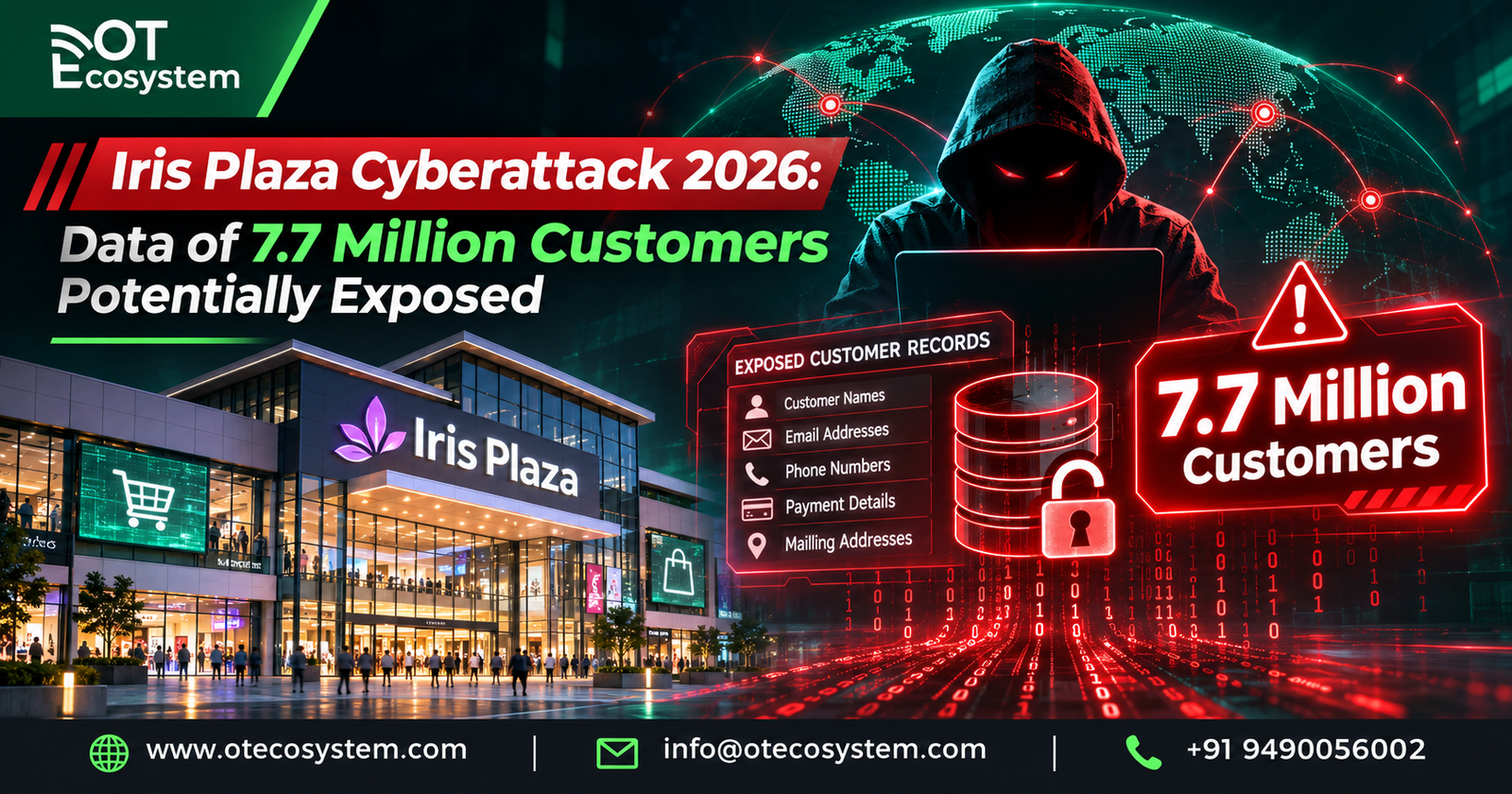
Iris Plaza, the online retail arm of Japan’s Iris Ohyama group, said on November 5, 2026 that a third party who accessed an external cloud service may have viewed or taken personal data on about 7.7 million people; that figure is the size of the stored data set, not a confirmed theft count.
Incident overview: what Iris Plaza has confirmed
Iris Plaza, which operates the official online store of Japanese manufacturer Iris Ohyama, found suspicious files in an external cloud service it uses on October 28, 2026, and immediately took its online shop and related systems offline. Its investigation then confirmed unauthorized third-party access. In a second report published on November 5, the company said data stored in that cloud environment may have been viewed or taken.
The headline number needs careful reading. Roughly 7.7 million people’s records were held in the affected environment: about 5.8 million members (including people who had already left) and about 1.9 million non-members, such as guest shoppers and campaign entrants. Iris Plaza says the number of records actually accessed or stolen, and the number of people actually affected, is still under investigation. Japanese security commentators have likewise stressed that 7.7 million describes the stored population, not a confirmed leak count.
The company has not found evidence of unauthorized access or leakage at its stores on third-party online marketplaces, and it reports no confirmed misuse or financial loss so far. Credit card data was not stored in the affected cloud service, according to the company.
For readers tracking cloud security breaches in retail and e-commerce, this is an incident to watch less for its technique, which is undisclosed, and more for what it shows about the exposure that comes with keeping large customer datasets in external cloud services.
Timeline of the Iris Plaza breach
The disclosure came in two steps, one week apart. Dates below are as reported by the company and Japanese and international coverage.
| Date (2026) | Event |
| October 28 | Suspicious files found in an external cloud service. Iris Plaza and related systems shut down; the SIMPLE STYLE site and Iris Tech Service sites are also suspended as a precaution. Access route blocked. |
| October 29 | First notice published: online store temporarily suspended after unauthorized access, possible data leak under investigation. Police and Japan’s Personal Information Protection Commission (PPC) notified. |
| November 5 | Second report: data in the cloud environment may have been viewed or taken; about 7.7 million people’s records were stored there. Customer notifications begin by email and other channels. |
| As of November 6 | Store still offline; no reopening date announced; no confirmed misuse reported. |
Data potentially exposed
The fields at risk depend on what each person registered, so not everyone’s record contains every item below.
| Group | People (approx.) | Fields potentially exposed |
| Members, including former members | 5.8 million | Name, address, phone number, email address, gender, password, date of birth and other registration data; password excluded for former members |
| Non-members (guest buyers, campaign entrants) | 1.9 million | Name, address, phone number, email address |
Passwords and some other fields were encrypted, according to the company, which has not said which method was used. That matters: a salted, slow password hash is far harder to crack than reversible encryption or a fast hash, and without the details outsiders cannot judge the risk. Iris Plaza advises anyone who reused their Iris Plaza password elsewhere to change it on those services.
Credit card data was not stored in the affected cloud service and is described as unaffected. The company also warns of impersonation emails, text messages, calls, websites and social accounts, and says legitimate notices will never ask for passwords, PINs or authentication codes.
Root cause and attack methodology: what is known and what is not
Iris Plaza has not published a root cause, an initial access vector or a technical description of the intrusion, and no CVE identifier, malware family or indicators of compromise have been disclosed. This article does not speculate beyond that.
Confirmed by the company
- The point of compromise was an external cloud service the company uses; the company says credit card data was not stored there.
- Suspicious files were present in that environment when the incident was detected on October 28.
- A third party gained unauthorized access, and the company says it has blocked the access route.
Not disclosed
- How the attacker got in (stolen credentials, a misconfigured storage or access policy, a vulnerable service, a compromised vendor or third-party integration are all common causes of cloud data theft, but none is confirmed here).
- How long the attacker had access before October 28, and whether data was copied out.
- Which cloud provider or service type was involved.
- Whether any ransom demand was made.
One Japanese analyst note makes a useful point: the fact that data of former members was still retained has not been shown to be the cause of the intrusion. It is, however, a retention question worth asking, because it enlarged the population at risk.
Threat actors and attribution
No individual, criminal group or state-sponsored actor has been named, and no group has publicly claimed the attack in the sources reviewed. There is no confirmed attribution and no verified link to ransomware or an extortion campaign. Readers should treat any later claim on leak forums or social media as unverified until Iris Plaza, the police or the PPC confirms it.
A 2008 incident at the same company, in which an attacker used SQL injection from China and up to 28,105 credit card numbers were potentially exposed, is a separate, unrelated event. It is mentioned only because it appears in search results; nothing reported links it to this one.
Impact assessment
Operational. The Iris Plaza shop has been offline since October 28 with no reopening date; the company says it will decide after identifying the cause and putting prevention measures in place. The SIMPLE STYLE home furnishings site is also down, and Iris Tech Service has suspended sites and new applications for its appliance subscription and delivery-and-installation services. The company reports no confirmed unauthorized access at those group services.
Customer and secondary-harm risk. Contact details plus dates of birth are well suited to phishing, smishing and phone scams, which is why the company warns of impersonation. For members, password exposure creates a credential-stuffing risk if the encryption is weak or the password is reused. No misuse has been reported as of November 5.
Regulatory. The company reported the incident to police and the PPC on October 29. Further regulatory consequences are unknown and no penalty has been announced.
Financial and reputational. No loss figures, remediation cost or sales impact have been published, so none are stated here. Reputational damage is plausible given the number of people involved, but that is an assessment, not a reported fact.
The incident also landed in a busy week: several other Japanese organizations disclosed unauthorized access in the same days, some also tied to cloud or outsourced services, according to Japanese security news roundups. No public source links them to the Iris Plaza case.
Why it matters for IT, OT, IoT and connected enterprises
This is a consumer-data incident, and nothing reported suggests industrial control systems, SCADA or OT networks were touched. Iris Ohyama is a manufacturer, but the affected system is the e-commerce side, and no production impact has been reported.
The relevance for industrial and connected-enterprise security teams is architectural:
- Business data lives outside the perimeter. Customer, supplier and device-registration data increasingly sits in cloud services reached through identities and APIs, not through the network controls that protect plants.
- Manufacturers sell direct. Companies that run both factories and consumer or dealer portals hold large personal datasets in IT systems that share identity providers, vendors and sometimes networks with OT-adjacent teams. A weakness in one cloud tenant can become a trust problem for the whole group.
- IoT and appliance services widen the footprint. Iris Tech Service’s appliance subscription and installation services were paused as a precaution, a reminder that connected-product service platforms depend on the same back-end data stores as the shop.
- Group-wide shutdowns are a response-planning issue. Pulling related sites offline within hours limited exposure but also stopped sales and service, a trade-off OT and IT teams should rehearse before they face it.
Incident response and recovery status
The response so far, as described by the company:
- Detection and containment (October 28). Suspicious files were found, the shop and related systems were shut down, and the unauthorized access route was blocked.
- Precautionary suspensions. The SIMPLE STYLE site and Iris Tech Service’s web services were taken offline the same day.
- Regulatory and law-enforcement notification (October 29). Police and the PPC were informed.
- Customer notification (from November 5). Individual emails and other notices to potentially affected people began, with more to follow as the investigation progresses.
- Continuing investigation. The company says it is working with the authorities and outside specialists on cause, scope and recovery.
Recovery is incomplete. The store has no reopening date, and the company ties resumption to identifying the cause and implementing recurrence-prevention measures. It has not said whether a forensic firm has been engaged by name, or whether credentials or keys have been rotated.
Security recommendations
The guidance below is general good practice informed by what Iris Plaza has disclosed; it is our analysis, not the company’s findings.
For organizations that keep customer data in cloud services
- Inventory and minimize. Know every cloud store holding personal data and delete what you no longer need. Retaining records of people who have left, as appears to have been the case here, increases breach size.
- Lock down identities. Enforce phishing-resistant MFA on all cloud console, API and service accounts; remove long-lived access keys; review privileged roles and third-party integrations regularly.
- Review exposure and configuration. Continuously check storage permissions, public endpoints and network allow-lists with a cloud security posture tool, and alert on new or unexpected files in sensitive buckets or containers.
- Log and detect. Turn on cloud audit logging, keep it somewhere the attacker cannot alter, and alert on unusual reads, bulk exports and new identities. Suspicious files were what exposed this intrusion, so file-integrity monitoring is worth having.
- Store passwords properly. Use a salted, slow, purpose-built password hash, and say so in disclosures; vague references to encryption leave customers unable to judge their risk.
- Segment and separate. Keep customer data stores, identity systems and any OT-adjacent environments in separate trust zones with separate credentials.
- Practice the shutdown. Pre-agree who can take group sites offline, how customers are told, and how decisions are logged. Rehearse regulator notification timelines, including Japan’s PPC reporting duties.
For affected or possibly affected customers
- Change your Iris Plaza password anywhere you reused it, and use a password manager with unique passwords.
- Treat unexpected emails, texts and calls that mention Iris Plaza as suspect, and go to the official site by typing its address rather than following links.
- Remember Iris Ohyama has previously warned about fake sites impersonating Iris Plaza.
- Credit card data is reported as not stored in the affected service, but check statements as ordinary hygiene.