
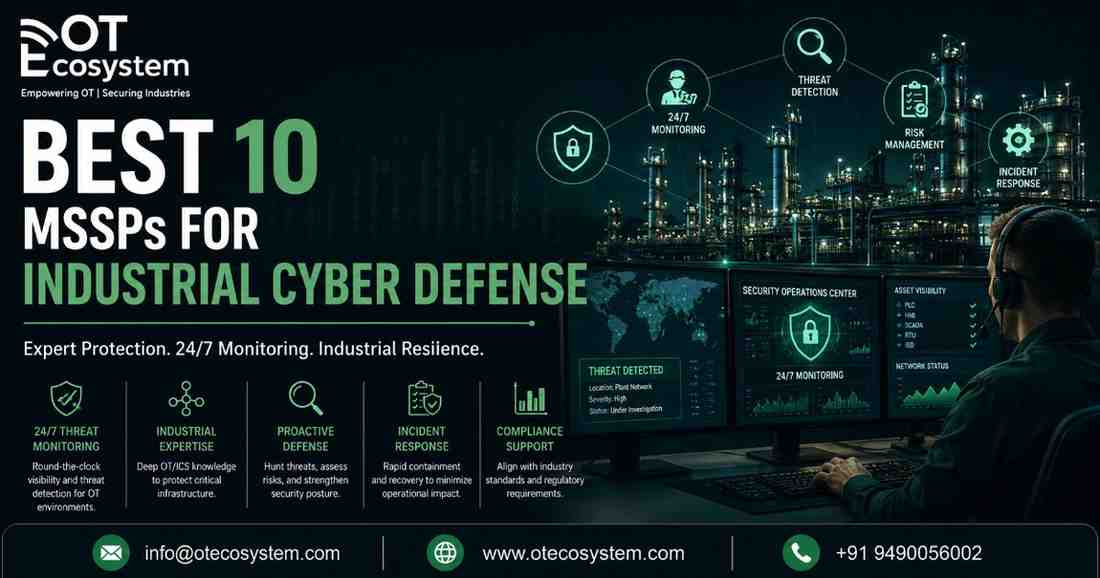
The Critical Need for Industrial-Grade MSSPs
In 2026, the lines between Information Technology (IT) and Operational Technology (OT) have blurred, creating a massive attack surface for critical infrastructure. Unlike traditional enterprise environments, Industrial Control Systems (ICS) and OT environments cannot afford the luxury of downtime. A single misconfiguration or unpatched vulnerability can lead to physical safety hazards, environmental disasters, or massive economic losses. As threat actors increasingly deploy sophisticated, protocol-aware malware targeting PLCs and HMIs, organizations are turning to Managed Security Service Providers (MSSPs) that possess specialized knowledge of industrial protocols like Modbus, DNP3, and OPC UA. This guide highlights the top 10 MSSPs capable of securing the unique, high-stakes environments that define modern industrial operations.
Top 10 MSSPs for Industrial Cyber Defense
1. IBM Security
IBM Security remains a global titan for industrial defense, leveraging its extensive history in protecting complex, multinational infrastructure. Their managed services go beyond standard monitoring by integrating deep threat intelligence research tailored for regulated sectors like energy and manufacturing. With a vast network of global Security Operations Centers (SOCs), IBM provides the operational maturity required to manage multi-regional industrial footprints. Their ability to integrate legacy OT assets with modern security stacks makes them a top choice for organizations facing stringent compliance and reliability mandates.
2. Verizon Managed Security Services
Verizon’s managed security practice is bolstered by one of the largest data breach investigation datasets in the world. Their approach to industrial security focuses on real-time detection and rapid incident response, drawing directly from their proprietary research into real-world threat actors. By leveraging their massive, secure infrastructure, Verizon helps industrial enterprises maintain operational continuity across distributed sites. They are particularly effective for organizations that require a provider with the scale to handle massive telemetry volumes while maintaining strict uptime and performance SLAs.
3. Dragos (OT Managed Threat Hunting & Defense)
Dragos is a recognized global authority in industrial cybersecurity, offering dedicated OT-managed detection and threat-hunting services built specifically for ICS and SCADA environments. Unlike generic IT security providers, Dragos delivers non-intrusive network visibility, asset discovery, and deep protocol analysis without risking plant downtime or destabilizing sensitive physical processes. Their managed services leverage proprietary industrial threat intelligence and specialized playbooks to identify malicious behavior, unauthorized PLC configuration changes, and zero-day exploits across manufacturing, electric power, and water facilities. By equipping security operations teams with actionable threat context and expert OT incident responders, Dragos empowers critical infrastructure operators to meet strict regulatory frameworks like ISA/IEC 62443, NERC CIP, and NIS2.
4. Arctic Wolf
Arctic Wolf has redefined the MSSP model with its “Security Operations as a Service” approach, centered around a dedicated concierge security team. For industrial clients, this means having experts who not only monitor for threats but also provide context-aware interpretations of alerts, which is vital when dealing with sensitive OT equipment. Their model is highly attractive to mid-market industrial firms that lack 24/7 internal security staff. By combining automated detection technology with a human-in-the-loop strategy, Arctic Wolf ensures that industrial operators receive actionable intelligence rather than just an overwhelming volume of false positives.
5. eSentire
Widely recognized for its expertise in Managed Detection and Response (MDR), eSentire excels in proactive threat hunting—a necessity in an era where attackers often dwell in industrial networks for months undetected. Their service combines sophisticated automated detection with elite analysts who investigate suspicious activity in real time, making them a preferred partner for organizations that demand a highly responsive, offensive approach to security. For industrial environments, eSentire’s ability to coordinate rapid response actions ensures that potential breaches are contained before they can escalate into physical operational disruption or safety incidents.
6. Sophos (including Secureworks)
Following the integration of Secureworks, Sophos has emerged as a comprehensive powerhouse in the managed security market. They provide an end-to-end service that spans endpoint, network, and cloud security, which is increasingly relevant as industrial edge devices become more interconnected. Their Taegis XDR platform offers deep visibility, allowing security teams to correlate threats across both IT and OT domains. This unified visibility is essential for industrial companies seeking to dismantle the “siloed” security approach that often leaves OT networks vulnerable to lateral movement from compromised IT systems.
7. Expel
Expel has built a reputation for radical transparency and ease of use, which is a breath of fresh air in the complex world of industrial cybersecurity. Many industrial security teams choose Expel because the platform provides clear, understandable insights into ongoing investigations, empowering internal teams to stay informed without needing to be security experts themselves. Their modern platform approach integrates seamlessly with existing security tools, making it an excellent choice for organizations that want to supplement their current capabilities with high-fidelity, managed detection and response support.
8. Tata Communications
Tata Communications provides a robust managed security suite designed for global industrial operations. Their services integrate advanced threat management with continuous oversight of network infrastructure, ensuring that industrial assets remain protected across diverse geographies. They are particularly skilled at managing compliance reporting and regulatory requirements, which are often the primary drivers for industrial firms seeking an MSSP. By offering a unified security architecture, they help organizations simplify their digital ecosystem and delegate the burden of routine patching and security updates.
9. Trustwave
Trustwave is a veteran in the managed security space, offering a comprehensive suite of threat detection, incident response, and vulnerability management services. Their utilization of advanced analytics and real-time monitoring is specifically effective for industrial organizations that need to maintain strict adherence to global compliance standards. Trustwave’s strength lies in its ability to deliver centralized policy management, ensuring that security protocols are consistently enforced across distributed plants and remote industrial sites, thereby reducing the risk of data breaches and operational downtime.
10. Check Point Infinity Global Services
Check Point Infinity is renowned for providing a unified security architecture that protects networks, cloud infrastructure, and endpoints from the latest cyber threats. In the industrial sector, their focus on real-time threat prevention and centralized security management helps bridge the gap between IT and OT security policies. By automating threat detection and facilitating coordinated defenses across distributed environments, Check Point helps industrial organizations address challenges related to data protection and regulatory compliance, ensuring that security does not come at the cost of operational efficiency.
Key Takeaways for Industrial Procurement
When evaluating these providers, remember that an industrial-grade MSSP must prioritize Operational Continuity above all else. During your selection process:
- Prioritize OT-Specific Experience: Ensure the provider understands the nuances of industrial protocols and has a history with your specific industry (e.g., Oil & Gas, Utilities).
- Demand Transparency: Ask for clear playbooks on how they handle incidents within a live production environment.
- Validate Integration Capabilities: Ensure their tools can ingest logs from your specific PLC/HMI brands without disrupting real-time traffic.
Conclusion
As convergence between Information Technology and Operational Technology accelerates in 2026, selecting the right Managed Security Service Provider is no longer just an IT decision—it is a critical operational and physical safety imperative. Standard enterprise MSSP services often fall short on the shop floor where process continuity, zero-latency network monitoring, and specialized protocol knowledge dictate success. By partnering with an industrial-grade MSSP that combines non-intrusive protocol inspection, 24/7 OT threat hunting, and deep regulatory alignment, industrial enterprises can proactively safeguard critical assets, satisfy strict compliance mandates, and maintain uninterrupted production across global operational footprints.