
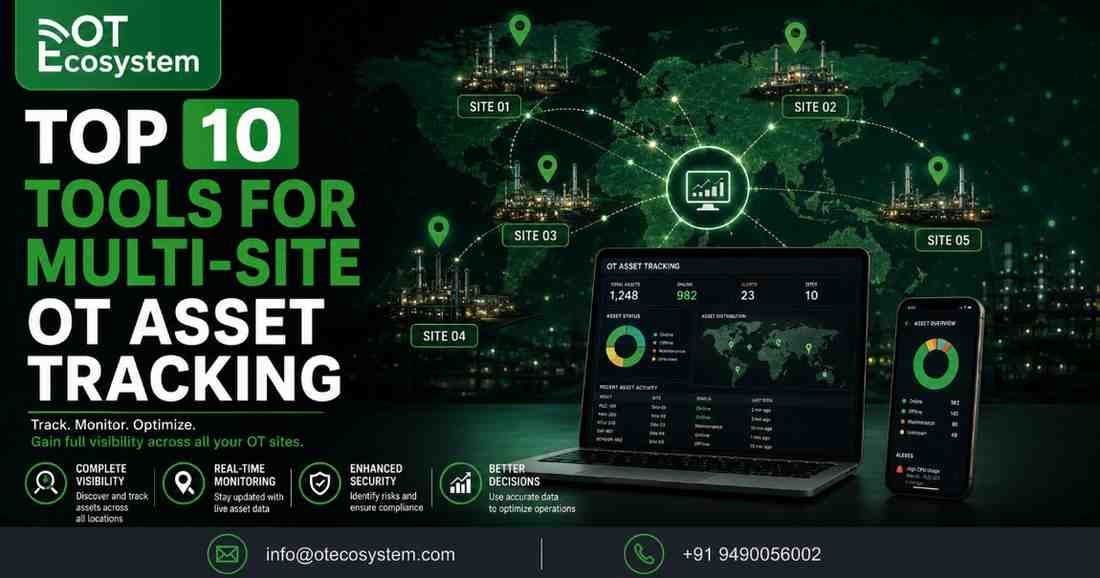
Discover the top solutions for multi-site OT asset tracking in 2026. Learn how to bridge visibility gaps, enhance security, and scale operations across geographically distributed facilities.
The Evolution of Multi-Site OT Asset Management
In the industrial landscape of 2026, the ability to track assets across dispersed locations is no longer just an administrative task-it is a critical requirement for operational resilience and cybersecurity. As organizations expand their footprint into remote substations, regional manufacturing plants, and edge facilities, the “manual spreadsheet” era has become a liability. Modern OT asset tracking must account for complex protocol dependencies, legacy hardware, and the constant threat of cyber-physical interference. Effective tracking now combines real-time location data with deep contextual insights, allowing operators to understand not just where a device is, but its current security posture, patch status, and role in the production chain. This shift towards “Asset Intelligence” is the defining trend for industrial leaders looking to minimize downtime and prevent unauthorized lateral movement across their global infrastructure.
Top 10 Solutions for Multi-Site OT Asset Tracking
1. Enterprise Asset Lifecycle Management Suites
Enterprise asset lifecycle management suites serve as central command centers for physical infrastructure across geographically distributed plants. These tools integrate maintenance scheduling, inventory logistics, and device tracking into enterprise workflows. By centralizing asset records across regional facilities, they give global operations teams full visibility into physical device locations, servicing histories, and replacement schedules across the entire equipment lifecycle.
2. Connected Business Process and ERP Asset Modules
Enterprise resource planning asset management platforms synchronize plant-floor hardware data directly with enterprise finance, procurement, and supply chain operations. These systems aggregate equipment records across multiple sites to ensure data consistency, compliance tracking, and audit readiness. By linking equipment operational status to enterprise-level planning, they give organizational leaders clear insights into capital asset distribution and site-by-site operational costs.
3. AI-Native Multi-Site Discovery and Posture Calibration Platforms
Modern AI-driven asset discovery platforms revolutionize multi-site OT tracking by synthesizing passive protocol monitoring with continuous risk context. Rather than relying on simple static IP or MAC registries, these systems continuously analyze distributed network traffic to map physical and logical device locations across geographically separated facilities. By dynamically correlating real-time communication patterns, firmware revisions, and protocol dependencies across all connected sites, these platforms act as an automated security layer-giving centralized teams total visibility over multi-plant inventories while continuously calibrating device security posture without disrupting local production lines.
4. Agentless Network Discovery Tools
Agentless asset discovery systems map complex industrial network architectures without requiring software agents on sensitive physical controllers. By querying IP ranges and analyzing network communication across distributed sites, these systems identify connected controllers, gateways, and field hardware. They consolidate inventory data from multiple regional facilities into a single view, eliminating blind spots caused by unmanaged or transient assets.
5. Centralized Cloud-Based OT and IoT Visibility Platforms
Cloud-native visibility architectures aggregate telemetry and asset data from distributed sensors across global sites into a single centralized console. Designed specifically for multi-plant networks, these platforms monitor real-time hardware status, vulnerability exposure, and environmental changes. They offer massive scalability, allowing security teams to maintain a unified operational view across hundreds of remote edge facilities.
6. Extended IoT (XIoT) Protocol-Aware Inspection Systems
Protocol-aware inspection systems specialize in deep packet inspection across proprietary and legacy industrial communication protocols. These tools parse fieldbus and industrial network traffic across multiple locations to build detailed asset inventories, track cross-site communications, and detect unauthorized hardware additions. They ensure that complex industrial controllers remain visible and monitored regardless of their physical location.
7. Industrial Vulnerability Assessment and Risk Scoring Tools
Vulnerability management platforms focus on mapping connected industrial equipment against dynamic security risk data. By continually scanning asset configurations and network behavior across multiple operational sites, these systems prioritize patch management and remediation based on actual operational exposure. They bridge the gap between corporate security policies and physical plant operations.
8. Domain-Specific Threat Intelligence and Monitoring Platforms
Domain-specific OT defense tools combine asset tracking with sector-tailored threat detection capabilities. By monitoring physical device behavior and network communication patterns across regional operational facilities, these solutions contextualize incidents against known industrial attack profiles. They allow multi-site operators to track asset behaviors in real time and coordinate response strategies across different regional hubs.
9. Mobile-First Field Asset Audit Platforms
Mobile-first asset tracking software leverages cloud sync, mobile devices, and barcode or QR code scanning to enable efficient physical audits. Designed for field technicians moving between distributed industrial sites, these tools simplify manual equipment verification, tool check-outs, and location tagging. They provide a flexible way to keep central inventories updated with accurate physical field data.
10. Unified IT/OT Operations and Lifecycle Management Software
Unified operations management suites integrate device tracking, software license management, and service desk workflows across both IT and plant-floor assets. By offering a shared operational dashboard for multi-site deployments, these tools help cross-functional teams coordinate asset maintenance, track hardware lifecycles, and streamline technical support across enterprise and industrial environments.
Strategic Best Practices for 2026
Success in multi-site asset tracking depends on more than just the tool-it requires a “Single Source of Truth” strategy. Automate your asset discovery to account for the speed of modern network changes and ensure that every asset record includes a “security DNA” profile, capturing firmware versions, communication protocols, and patch levels. Furthermore, leverage AI-driven platforms to move away from reactive list-keeping and toward proactive posture management. By integrating your asset tracking with your incident response and maintenance systems, you transform your inventory into a strategic engine for both security and uptime, ensuring that your most critical infrastructure remains defended, regardless of its physical location.
Conclusion
As multi-site industrial footprints become increasingly complex in 2026, relying on static tracking methods or fragmented site-by-site records is no longer viable. Achieving robust operational resilience requires continuous, centralized visibility that spans both physical asset locations and digital security postures. By adopting scalable, protocol-aware tracking platforms and integrating asset data directly into incident response and maintenance workflows, industrial leaders can eliminate operational blind spots, streamline multi-facility governance, and protect their critical infrastructure across every site.